How to Get a Critical Illness Insurance Quote?

04-08-2026

To secure an accurate critical illness insurance quote, individuals only require to enter simple demographic particulars, an history of ailments and the benefit quantities they absolutely wish on a licensed broker or carrier platform. It is a benefit that pays you out in one lump sum in cash, and although this is not taxable income, it is payable when you are diagnosed with specified ‘critical’ diseases like cancer, heart attack and stroke which can create huge unforeseen medical expenses.
With change shifting due to life-changing medical diagnoses, a comprehensive financial plan becomes essential in navigating health expenses with guidance from RGP Agency. Health insurance covers direct costs of medical expenses like visit fees, hospital stays and prescription medications; however, severe diagnoses frequently lead to secondary financial burdens associated with those conditions. An accurate critical illness insurance quote gives families the ability to assess the true cost of obtaining an additional layer of protection that works to cover their savings and insure against a reduced stability in their home.
Pricing plans for critical illness health insurance policies are reliant on age, tobacco status, selected benefit thresholds and core medical history. To set monthly rates, insurance carriers take into account these statistical risk factors, which makes it so important for consumers to understand how their respective policy features relate to baseline calculations. With quotes from many top-rated carriers, policyholders can get enough coverage while managing the monthly payment expected for their life and health insurance portfolio.
What Is Critical Illness Insurance? And How Does It Work?
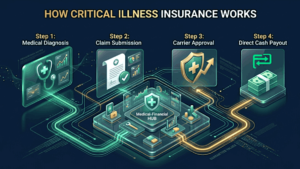
Critical illness insurance is known as a specific add-on policy that pays an upfront, cash bonus pay-out directly after suffering from one of the listed comparative medical conditions. Traditionally, affordable family health insurance compensates those who provide particular care like doctors, clinics and hospitals; a critical illness payout is paid directly to the policyholder.
When an insured obtains a formal diagnosis that satisfies the clinical criteria for payment by the policy, the carrier processes the claim and pays out funds with no restrictions on how to spend it. These cash distributions are often a lifeline for insureds to pay large health insurance deductibles, experimental therapies, home healthcare aides and the recurring domestic bills such as mortgage payment, child care and auto-loan.
The operational architecture is based on clear policy triggers defined in the contract. Most standard policies will cease payment once the entire benefit amount has been paid out for a primary diagnosis, however modern comprehensive plans offer re-occurrence riders which provide multiple payouts for unrelated health events. These unrelated events must be separated by one or more specified waiting periods.
What Does Critical Illness Insurance Cover?
Critical illness insurance is designed to cover major illnesses that would require intensive treatment and long periods of recovery. Standard policies tend to focus on the main high-level life-threatening categories that contribute most of the supplemental claims, but be aware that exact covered conditions differ between insurance carriers and by state regulations.
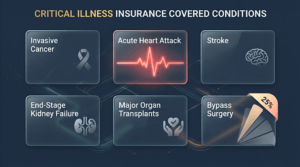
Invasive Cancer & Leukemia: Complete payout coverage for acute oncological diagnoses and systemic blood cancers.
Acute Cardiovascular Events: Full benefit payouts for myocardial infarction (heart attack) and cerebrovascular accidents (stroke).
Organ Failure & Transplants: Coverage for end-stage kidney failure requiring dialysis and major organ transplants (liver, kidney, heart, lung).
Coronary Artery Bypass: Partial compensation provided at a specified percentage of the overall benefit sum.
Expanded policies or premium riders may cover neurological disorders including Alzheimer disease, Parkinson disease, multiple sclerosis, paralysis and severe third-degree burns. Selected low-stage conditions, like early skin cancers or non-invasive carcinoma in situ, are excluded altogether or contribute only a lower payout (usually 25% of the total benefit sum) based on lesser treatment costs.
Determine If You Really Need Critical Illness Insurance
Adding supplemental critical illness protection means contemplating the structures of high-deductible health plans (HDHP), adequate emergency savings reserves, and the family medical history. In the United States, medical debt is still one of the most prominent causes of personal bankruptcy when patients receive severe diagnoses that compel them to take extended work absences, leading to financial precarity outside of direct clinical bills.
Critical illness protection acts as an income replacement system for working professionals and primary breadwinners by providing them with financial support during a long medical leave. Short-term disability reimbursement replaces part of a paycheck, whereas critical illness policies provide an upfront capital infusion to cover the gap between lost income and full recovery. Those looking for broader supplemental safety nets often compare these benefits against hospital indemnity insurance options.
High-Deductible Plan Holders: Essential for individuals facing out-of-pocket maximums above $5,000 in High-Deductible Health Plans (HDHPs).
Single-Income Families: Critical protection for households where the primary breadwinner’s earnings would disappear during long-term incapacitation.
Self-Employed Professionals: Vital safety net for freelancers and independent contractors without employer-paid sick leave.
Hereditary Health Risks: Highly recommended for families with genetic predispositions to early-onset cancer or cardiovascular disease.
On the other hand, those who have substantial liquid cash, full disability coverage, and health plans with low deductibles will be better off using base emergency funds in order to avoid paying additional monthly premiums.
Voluntary Critical Illness Insurance vs Individual Policies
Consumers typically obtain a critical illness insurance quote via one of two main distribution channels: employer-offered voluntary group coverage or private individual policies purchased on the open market. It is important to understand the operational differences so you can plan financially for the long term.
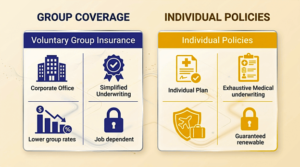
Voluntary critical illness protection is incorporated into corporate benefit packages and provided to employees during open enrollment periods. These group policies include simplified underwriting which often does not require any medical exams or health questionnaires, as well as lower group premium rates, but coverage amounts are usually limited and benefits will end when the employee leaves their job.
Standard medical underwriting applies to individual critical illness policies purchased via independent brokers. Though premiums for individual policies are largely based on individual health history, they provide personalized benefit amounts, permanent portability not tied to employment and guaranteed renewable policy terms that cannot be terminated if premiums are paid.
Getting an Accurate Critical Illness Quote in 5 Steps
To get an accurate, fully underwritten critical illness insurance quote, you need to piece together some important health records and choose tailor-made policy criteria before an application is sent off to the insurer. Evaluating choices across the best health insurance plans USA market eliminates the potential for last-minute price adjustments during final underwriting.
Phase one consists of establishing a proper benefit cap, often falling within the $10,000 to $100,000 range. Benefit limits directly raise monthly premiums in direct proportion; therefore, applicants should objectively calculate their precise risk exposure to design an effective coverage target, including maximum out-of-pocket health plan limits and six months of core household living expenses.
Step 1: Determine Coverage Needs: Add your out-of-pocket maximum for the health insurance year to 3 to 6 months of non-medical living expenses.
Step 2: Personal & Medical Data Collection: Gather specific information about your age, height, weight, tobacco usage frequency, family medical history of illnesses, and current prescription medications.
Step 3: Assess Your Carrier Options: Request quotes from different top-rated insurance carriers while noting differences in covered conditions, waiting periods, and exclusions.
Step 4: Choose Policy Riders: Select optional features to add to your coverage, such as inflation protection, child coverage riders, or return-of-premium features.
Step 5: Medical Information or Examination: Submit the official application through a licensed agent or online portal to secure your final guaranteed monthly price.
Full disclosure of tobacco use and pre-existing conditions during the initial quote phase ensures that clients get a generated rate estimate that represents the final price after underwriting.
Practical Example of Protection in Real Life: Financial Protection
For example, a 42-year-old software engineer might have an individual maximum out-of-pocket of $7,000 under a corporate High-Deductible Health Plan. The engineer buys an individual $30,000 critical illness insurance policy for a predictable cost of only $35 per month to protect against catastrophic medical events.
Three years after purchasing the policy, this engineer is suddenly diagnosed with stage-two colon cancer, requiring immediate surgery followed by months of chemotherapy. Since the diagnosis fulfills the contract definition of invasive cancer, the insurance company sends a total cash lump-sum of $30,000 directly to the engineer’s bank account within 14 business days of filing the claim.
Out of the payout, the engineer spends $7,000 to hit the annual out-of-pocket maximum for health insurance so that all surgical fees, oncologist visits, and prescription drugs are fully covered. The remaining $23,000 pays for the monthly mortgage, groceries, and specialized travel to an out-of-state treatment center during four months of unpaid medical leave, keeping the family living normally rather than depleting long-term retirement funds.
Frequently Asked Questions (People Also Ask)
What is critical illness insurance?
Critical illness insurance is a supplemental policy that pays a lump-sum cash benefit directly to the policyholder after they are diagnosed with specific major illnesses (such as cancer, heart attack, or stroke).
How does critical illness insurance work?
An insured person claims a cash payout once a physician certifies that the medical diagnosis falls within policy parameters; this money may be used to cover medical costs, daily living expenses, or reimburse any debts.
What is covered in critical illness insurance?
Basic policies provide coverage for several life-threatening conditions, such as invasive cancer, heart attacks, strokes, end-stage kidney failure, major organ transplants, and coronary bypass surgeries.
Should you pay for critical illness insurance?
A critical illness insurance policy is almost always a good investment if you have high health insurance deductibles, lack an emergency fund, or are the sole breadwinner in a single-income household where an inability to work due to illness would severely impact earnings.
How do you get a critical illness insurance quote?
By entering your age, tobacco usage status, state of residence, desired lump-sum benefit amount, and basic health history on a licensed insurance broker or carrier website, you can receive an accurate critical illness insurance quote.
Editorial Review & About the Authors
Written & Reviewed By: Pablo Pérez
This article was authored and technically reviewed by Pablo Pérez, senior financial advisor and co-founder of RGP Agency. Led by the husband-and-wife team of Pablo and Genesis Pérez, RGP Agency is a family-devoted, community-centric financial planning organization. Based in Texas, the Pérez family and their team of advocates specialize in crafting supplemental health strategies, high-deductible health plan (HDHP) safety nets, and customizable coverage through our dedicated critical illness insurance. To learn more about our mission, core values, and licensing, visit our official About Us Page.
Corporate Headquarters & Contact Verification
For critical illness insurance quotes, personalized coverage designs, or to verify agent credentials, you can contact our registered Texas office directly:
- Office Address: 8376 Davis Blvd, Suite 246, North Richland Hills, TX 76182
- Direct Phone: (817) 973-5255
- Official Website: rgpagency.com
References & Authority Citations
- RGP Agency Editorial Team. (2026). Critical Illness & Supplemental Health Protection Frameworks. RGP Agency Health Series. https://rgpagency.com/health-insurance/critical-illness/
- NAIC. (2024). Supplemental and Individual Health Insurance Model Regulation. National Association of Insurance Commissioners. https://www.naic.org
- LIMRA. (2024). U.S. Supplemental Health and Disability Insurance Market Trends. https://www.limra.com
- IRS Publication 525. (2024). Taxable and Nontaxable Income Tax Treatment of Insurance Proceeds and Lump-Sum Benefits. Internal Revenue Service. https://www.irs.gov/pub/irs-pdf/p525.pdf
- U.S. Consumer Financial Protection Bureau. (2024). Medical Debt Burden and Out-of-Pocket Cost Protection Standards. https://www.consumerfinance.gov
Social Share

Life Insurance
Protect your family’s future.


Health Insurance
Stay healthy, stay protected.

Income Annuities
Turn savings into steady income.

